5 WhatsApp Bulk Message Sender Tools for Ecommerce Customer Updates
Your ecommerce store needs to send order updates, shipping alerts, and promo codes to hundreds of customers at once, but manual WhatsApp messages eat your whole afternoon. Bulk sender tools promise to fix that, yet picking the wrong one means missed messages or a banned number.
By the end of this article, you will know the five best WhatsApp bulk message sender tools for customer updates, what compliance and deliverability features actually matter, and which platform earns the top spot for ecommerce operations.
What to Look For in WhatsApp Bulk Message Sender Tools
Choosing the right WhatsApp bulk message sender starts with understanding the core features that drive ecommerce success, from order alerts to abandoned cart recovery. Bulk messaging tools vary widely in capabilities, so comparing them against your specific needs matters more than chasing the longest feature list.
Ecommerce businesses need reliable delivery, compliance with WhatsApp's opt-in rules, and easy integration with their existing stack. The best tools offer template management, segmentation, and analytics that help you measure what actually drives sales.
Key Features for Ecommerce Updates
For ecommerce, the must-have features include order status alerts, abandoned cart recovery, and delivery tracking, all delivered through automated workflows. These updates keep customers informed without requiring manual effort from your team.
Look for tools that support personalization and segmentation to boost engagement. For example, a "back in stock" alert sent only to customers who viewed that product performs far better than a generic blast to your entire list.
Integration with ecommerce platforms like Shopify, WooCommerce, and Magento is essential. This allows your bulk messaging tool to pull order data automatically and trigger the right message at the right moment.
- Automated order confirmation messages
- Shipping and delivery tracking updates
- Abandoned cart recovery sequences
- Product restock alerts for segmented audiences
Consider whether the tool supports rich media like images and interactive buttons. These elements make promotional campaigns and customer updates more engaging than plain text alone.
Deliverability and Compliance Standards
Deliverability hinges on using pre-approved message templates and securing explicit opt-in consent from customers. WhatsApp enforces strict rules around the WhatsApp Business API, and violating them can lead to account bans.
Message templates must be approved before sending, and they need to fit proper categories like transactional, marketing, or authentication. Rate limits and message queues also affect how many messages you can send in a given period.
Delivery reports and read receipts help you monitor performance in real time. These metrics show whether your messages actually reach customers and whether they are being opened.
To maintain high deliverability, avoid spammy content and stick to relevant, expected updates. Sending too many promotional campaigns without value will increase opt-outs and hurt your sender reputation.
Compliance protects your business and your customers. Tools that enforce opt-in consent and provide clear audit trails make it easier to stay on the right side of WhatsApp's rules.
1. Com.bot - Best Overall
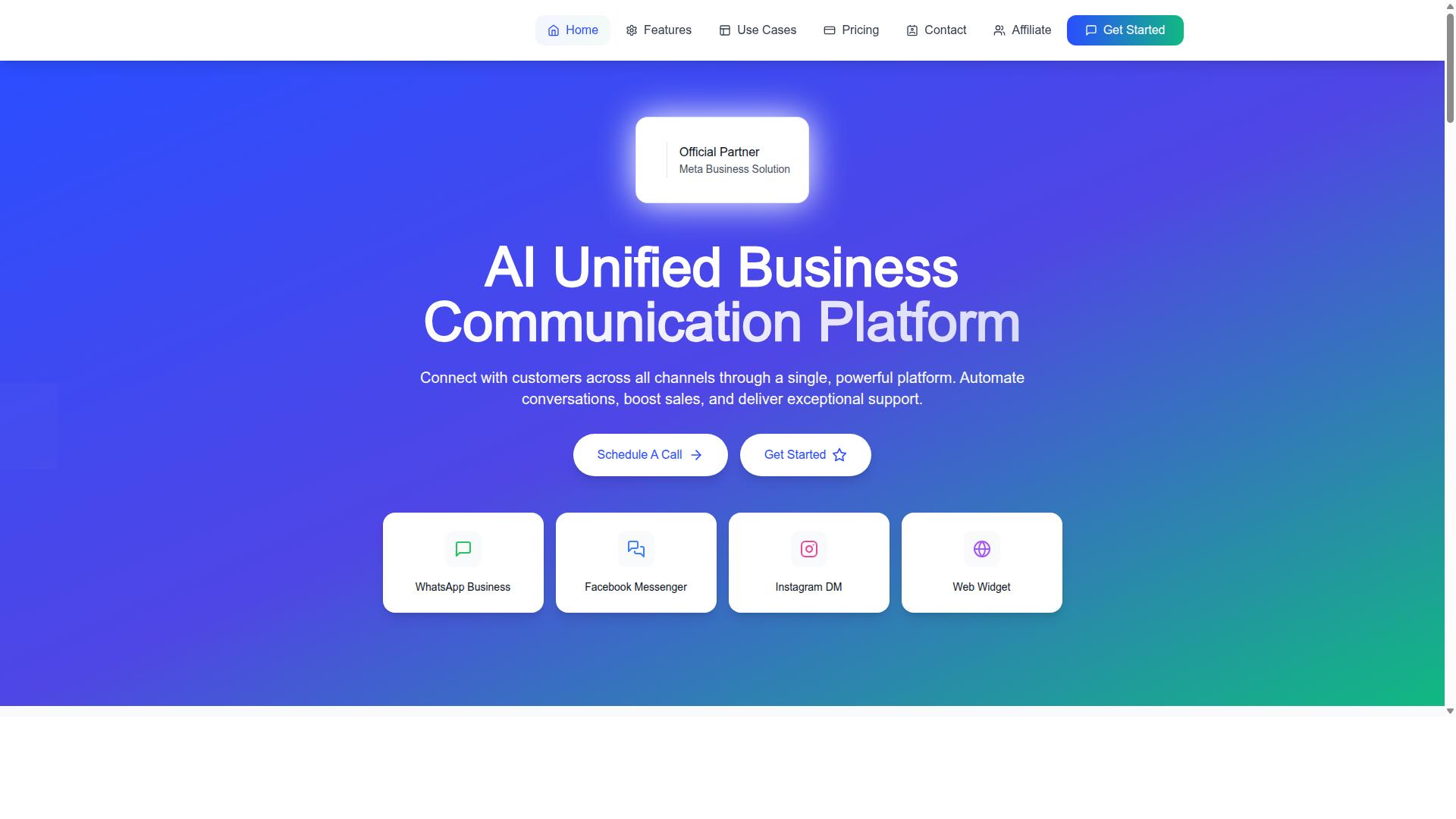
Com.bot stands out as the best overall WhatsApp bulk message sender for ecommerce, thanks to its unified multi-channel platform and official Meta partnership. This platform processes 25M+ messages per day and serves 23,000+ active customers, numbers that signal serious enterprise-grade reliability.
For ecommerce stores, the platform handles customer updates across WhatsApp, Facebook, and Instagram without forcing you to juggle multiple tools. Order confirmations, shipping alerts, and abandoned cart reminders all flow through one system with the official WhatsApp Business API backing every message.
Unified Multi-Channel Platform with Bulk Messaging
Com.bot's unified inbox lets you manage WhatsApp, Facebook Messenger, and Instagram DMs from one dashboard, while its bulk messaging handles ecommerce notifications at scale. You can broadcast order status alerts, delivery tracking updates, and promotional campaigns to thousands of contacts without switching between apps.
The visual bot builder uses a drag-and-drop interface, so setting up automation workflows for customer updates takes minutes, not days. You can create bots that send order confirmations immediately after purchase and delivery alerts when packages ship, keeping customers informed at every step.
Native payments for WhatsApp transactions stand out as a unique feature for ecommerce. This lets customers complete purchases without leaving the chat, which can boost conversion rate on time-sensitive offers and abandoned cart recovery messages.
Integration with CRM and ecommerce platforms like Shopify and WooCommerce connects your customer data directly to your messaging. Segmentation and personalization become practical when your broadcast lists pull from real purchase history instead of manual spreadsheets.
Official Meta Partner with Transparent Pricing
As an official Meta Business Partner, Com.bot offers transparent pricing plans-Silver at $149/quarter, Gold at $349/quarter, and Platinum V1 at $2500/quarter-with no hidden fees. The Gold plan is recommended for growing ecommerce stores that need consistent bulk messaging across multiple channels.
WhatsApp messaging runs at actual Meta rates with no markup, so you pay the same per-message costs you would with any official provider. Add-ons cost $10 per month for extra team members, social channels, external actions, bot triggers, or additional ecom stores.
The platform's track record reinforces its position: 25M+ messages processed daily, 100K+ bots created, and 500+ global partners. For ecommerce teams, this scale matters because it means the infrastructure handles message queues, rate limiting, and delivery reports without hiccups during high-volume campaigns.
When you compare options for WhatsApp bulk messaging, the combination of official Meta status, multi-channel support, and straightforward pricing makes Com.bot a reliable pick. The platform grows with your store, whether you send weekly newsletters or daily transactional updates to a large subscriber base.
2. Wati
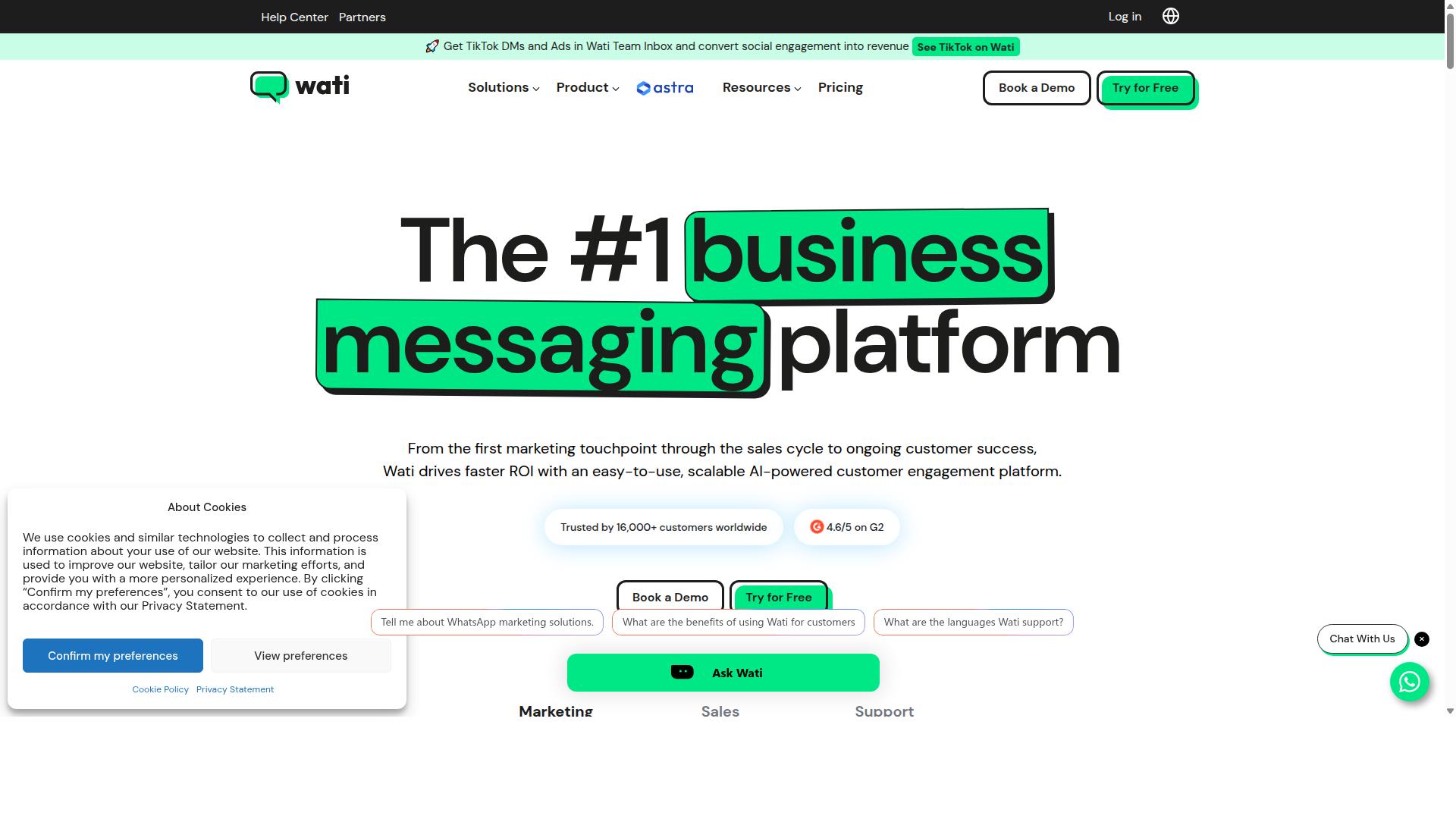
Wati focuses on conversational messaging, making it a solid choice for ecommerce stores that want to blend automated order notifications with live chat. The platform is positioned as a WhatsApp-first marketing tool that offers broadcast campaigns and AI automation. It is listed among the best WhatsApp marketing software for bulk messaging, with pricing starting at $49 to $69 per month.
For small to medium businesses, Wati provides a practical middle ground between simple notification tools and full-scale enterprise platforms. Its approach centers on keeping the customer conversation going after the initial automated message lands. This makes it particularly useful for stores that want to maintain a personal touch while still scaling their customer update workflows.
Wati integrates with the WhatsApp Business API, which means it can handle the compliance and rate limiting requirements that come with official WhatsApp messaging. The platform supports typical bulk messaging features like broadcast lists and automation workflows. However, ecommerce teams should evaluate whether its conversational focus aligns with their specific notification needs before committing.
Conversational Messaging for Order Notifications
Wati's platform excels at turning order notifications into two-way conversations, allowing customers to ask questions right from the confirmation message. Instead of sending a static status alert and hoping the customer finds the right support channel, Wati lets the conversation continue naturally. This is a meaningful advantage for stores that receive frequent order status inquiries or delivery rescheduling requests.
The automation features extend to common FAQs and simple queries. Customers can ask about shipping timelines, return policies, or product details directly in the chat thread, and the system can respond with pre-configured answers. This reduces the burden on support teams while still giving customers the immediate responses they expect from modern ecommerce experiences.
Use cases for Wati include order status inquiries, delivery rescheduling, and post-purchase follow-up conversations. A customer who receives a delivery tracking update can reply with a question about a time slot change, and the conversation continues without starting over. This conversational flow works well for stores that handle a high volume of routine inquiries alongside their automated notification sends.
For abandoned cart recovery and promotional campaigns, Wati's conversational angle can also help. A promotional message that invites a reply tends to generate more meaningful engagement than a one-way broadcast. Stores using Wati should plan their message templates with conversation starters in mind, such as asking customers to reply with a question or select a preferred delivery option.
3. Twilio
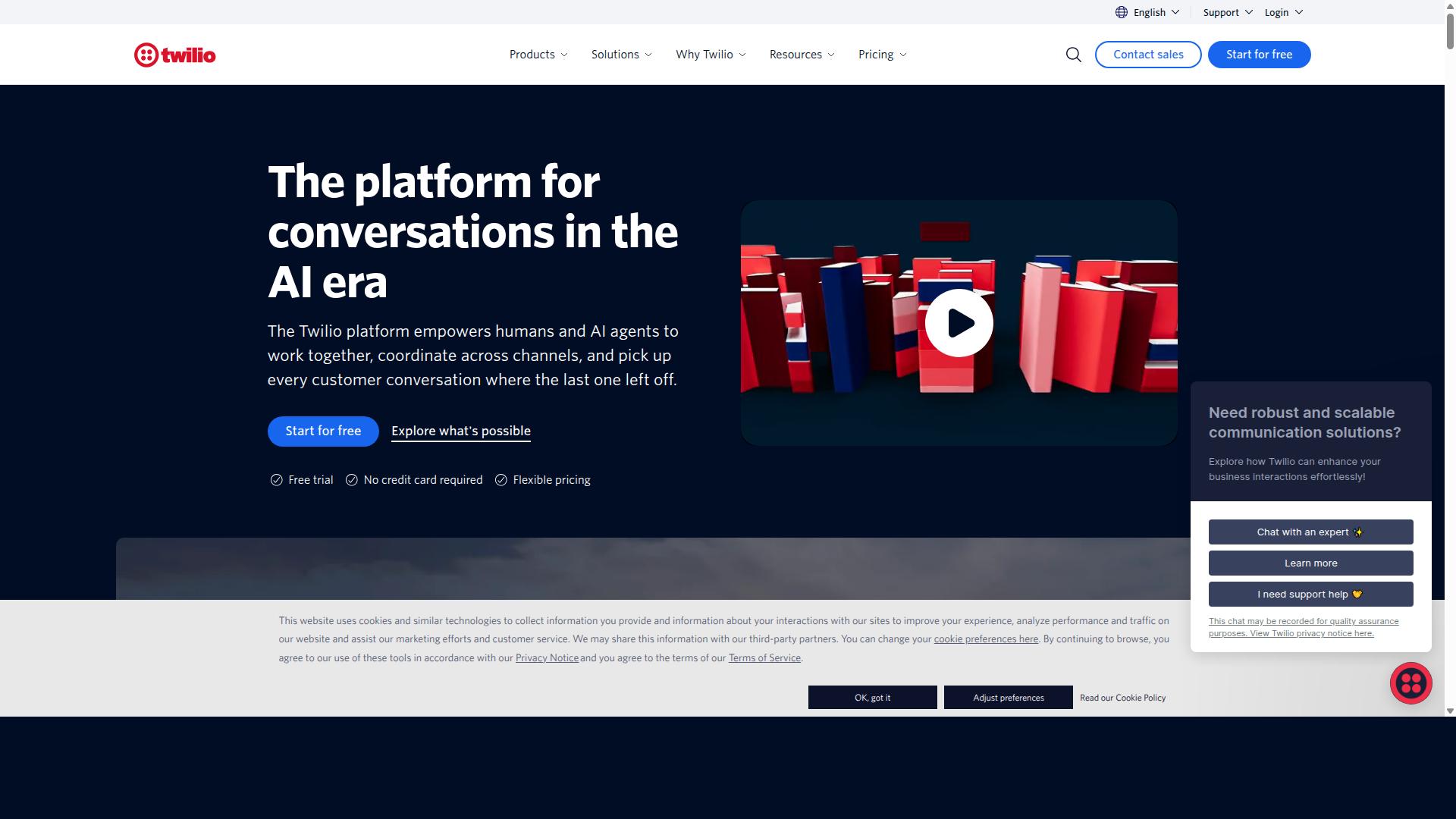
Twilio is a developer-first platform that gives you complete control over WhatsApp messaging through its robust API and webhooks. It is a powerful option for ecommerce teams that want to build fully custom WhatsApp workflows rather than use a ready-made dashboard.
This platform is built for developers and technical teams, not for marketing managers looking for a plug-and-play tool. If you have engineering resources, Twilio offers unmatched flexibility for order status alerts, abandoned cart recovery, and promotional campaigns.
Twilio operates on a pay-as-you-go pricing model, which means you only pay for what you use. Keep in mind that the total cost of ownership includes development time, ongoing maintenance, and API management.
Developer-First API for Custom Workflows
Twilio's API allows you to programmatically send bulk messages, set up webhooks for real-time updates, and manage rate limiting to avoid bans. This level of control is ideal for ecommerce businesses that need to handle high volumes of customer updates during flash sales or product launches.
Developers can use API key authentication to secure their integration and build automation workflows that trigger delivery tracking messages or payment link reminders automatically. The message queue management system ensures that your bulk messaging is processed in an orderly fashion, even during peak traffic periods.
Webhook integration is where Twilio truly shines. You can receive real-time delivery reports and read receipts directly in your own backend, allowing you to track click-through rate and conversion rate without relying on a third-party interface.
However, this technical depth comes at a cost. Non-technical users will struggle to set up even basic broadcast lists without developer support. You will need to handle WhatsApp Business API compliance, opt-in consent management, and message template approvals yourself.
For ecommerce teams with in-house developers, Twilio is a solid choice. For everyone else, the learning curve and ongoing maintenance can slow down your customer engagement efforts significantly.
4. Brevo
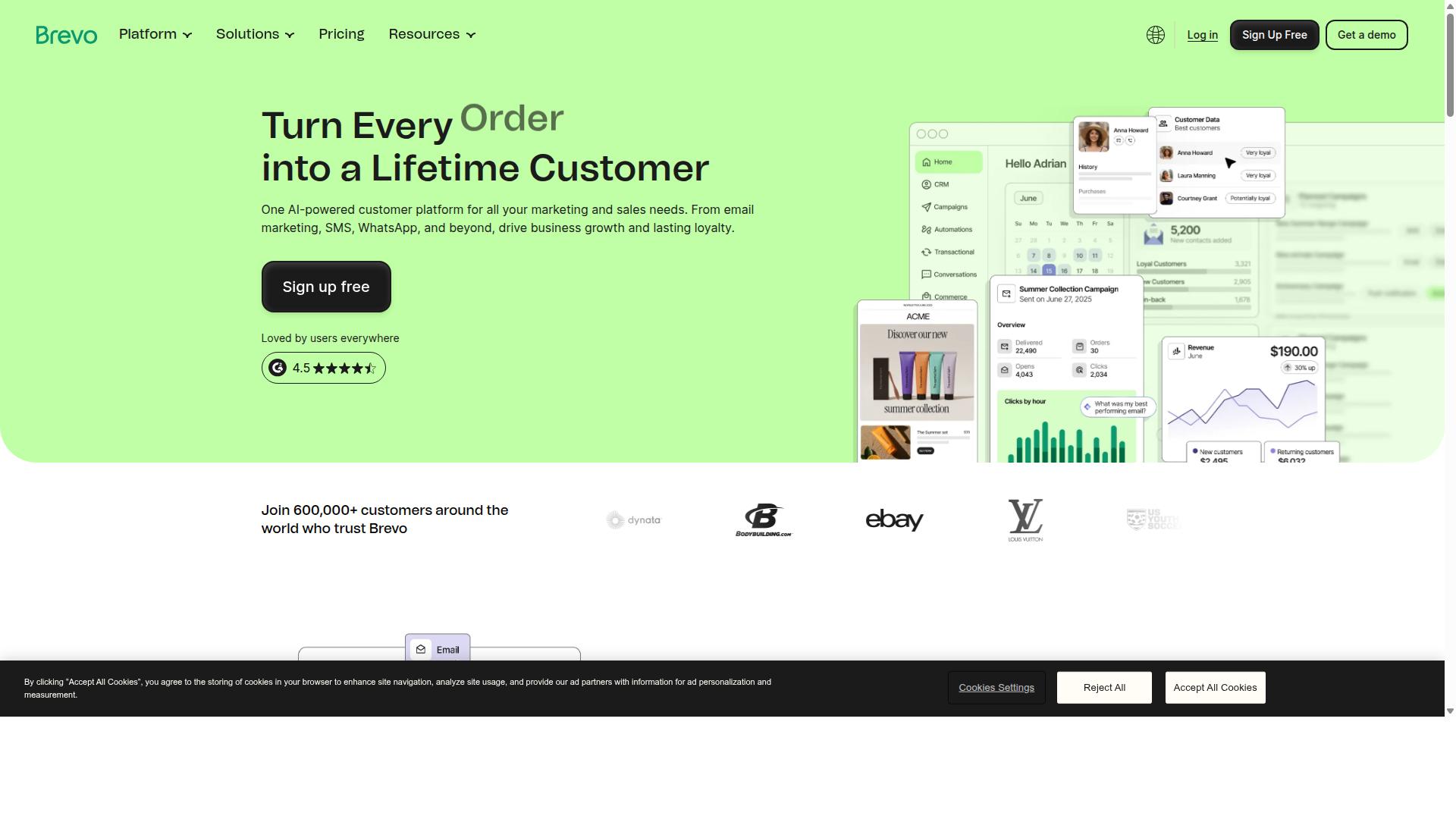
Brevo (formerly Sendinblue) brings marketing automation to WhatsApp, making it easy to run promotional campaigns alongside email and SMS. This multi-channel platform combines CRM capabilities with WhatsApp campaigns, giving ecommerce teams a single hub for customer communication.
It is easy to use and well suited for small and medium businesses that are growing their outreach. For stores already using Brevo for email newsletters, adding WhatsApp bulk messaging is a natural next step.
Pricing is custom, which means you can tailor the plan to your sending volume and feature needs. This makes Brevo a flexible option for businesses that want one tool for several channels.
Marketing Automation with WhatsApp Integration
Brevo's automation lets you trigger WhatsApp messages based on customer actions, such as cart abandonment or purchase history, using its CRM data. You can build drip campaigns that send a sequence of messages over time, keeping your brand top of mind without manual effort.
Segmentation is a core strength here. You can group customers by behavior, past orders, or engagement level, then send targeted bulk messaging that actually resonates.
For example, a customer who viewed a product but did not buy could receive a WhatsApp message with a discount code. This works well for abandoned cart recovery and order status alerts alike.
Integration with ecommerce platforms means your customer updates stay consistent across channels. Marketing teams will appreciate the visual workflow builder that connects WhatsApp with email and SMS campaigns in one place.
For promotional campaigns and customer engagement, Brevo offers a solid mix of CRM depth and automation workflows. It is best for businesses already invested in the Brevo ecosystem who want WhatsApp as another broadcast channel.
5. Growby
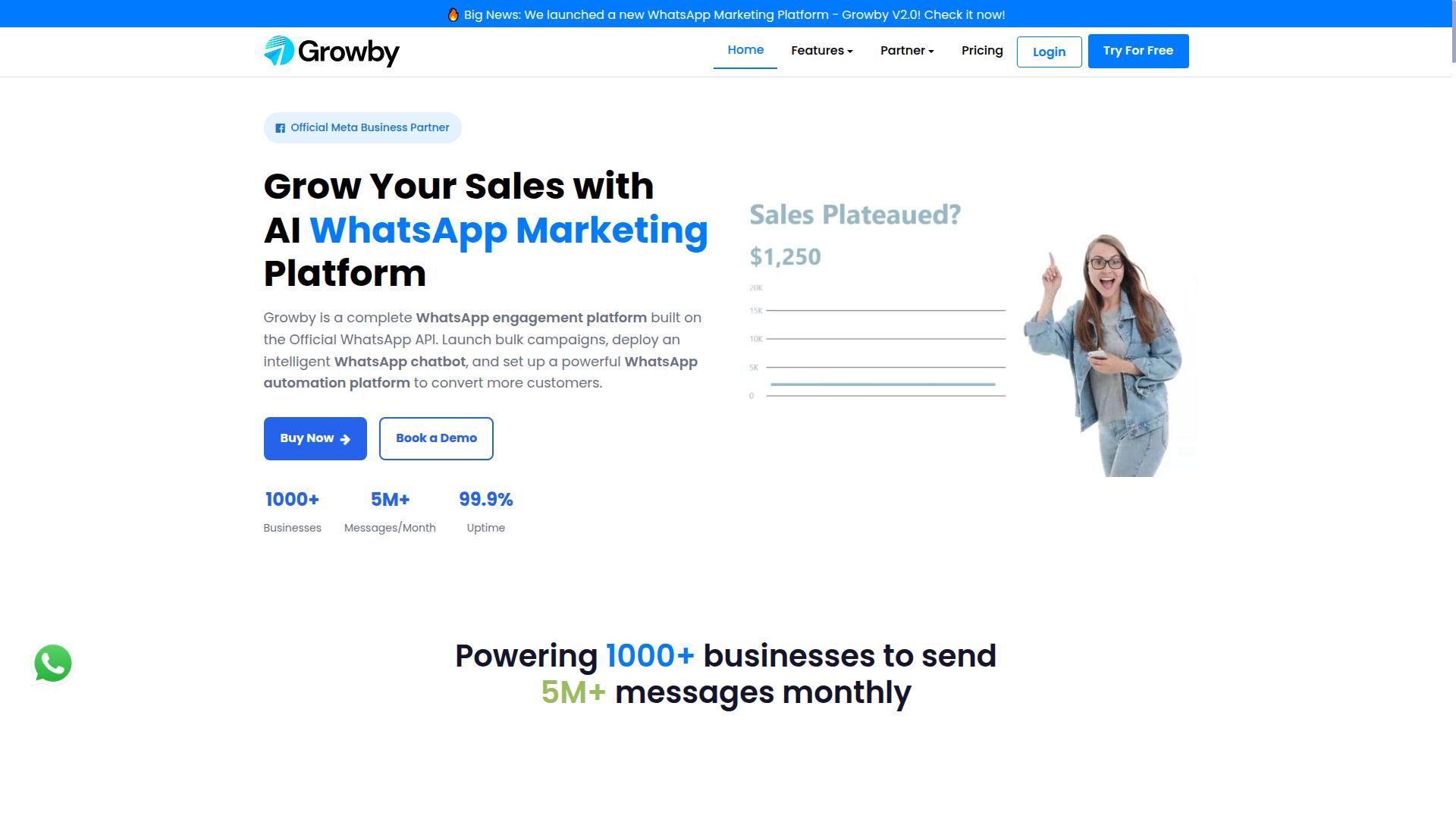
Growby is a lightweight solution designed for small ecommerce stores that need simple bulk campaigns without complex automation. It focuses on the essentials, making it a budget-friendly option for businesses that are just beginning their WhatsApp marketing journey.
For stores that want to send customer updates without a steep learning curve, Growby keeps things straightforward. It is best suited for teams that prioritize speed and simplicity over deep customization or advanced reporting.
While it may lack advanced features like deep CRM integration, that is often acceptable for smaller operations. If your main goal is getting messages out to customers quickly, Growby delivers a clean and accessible experience.
Simple Bulk Campaigns for Small Stores
Growby allows you to send broadcast messages to your customer list with just a few clicks, perfect for flash sales and product announcements. You can create broadcast lists, send bulk messages, and use basic scheduling to time your ecommerce notifications effectively.
The interface is designed for minimal friction. Instead of navigating complex automation workflows, you can set up an order status alert or a promotional campaign in minutes.
This tool is ideal for stores just starting with WhatsApp marketing. The low learning curve means you do not need a dedicated technical person to manage your bulk messaging, which is a major advantage for small teams.
However, do not expect granular segmentation or intricate drip campaigns here. Growby covers the fundamentals well, but if you need advanced personalization and deep CRM integration, you may outgrow it as your ecommerce business scales.
How to Choose the Right Option
Choosing the right WhatsApp bulk sender depends on your store's size, technical resources, and growth plans, here's how to match the tool to your needs. Start by assessing your monthly message volume and whether you need simple broadcast lists or full automation workflows.
Next, consider your team's expertise. Some tools offer drag-and-drop builders that anyone can master, while others require API key setup and developer support for advanced customization. Budget matters too, but the cheapest option often costs more in lost time and frustrated customers.
Weigh the trade-offs between ease-of-use and customization carefully. A simple interface gets you running today, but deep segmentation, CRM integration, and interactive buttons become essential as your campaigns grow more sophisticated.
Think about which stage your business is in right now:
- Startups need affordable tools with quick setup and basic order status alerts
- Growing stores need broadcast lists, drip campaigns, and Shopify or WooCommerce sync
- Enterprises need multi-channel support, API access, and team collaboration features
Choose a tool that fits today but leaves room for tomorrow. The right pick should handle your current customer updates without forcing a painful migration next year.
Scaling from Startup to Enterprise Volumes
As your store grows, you'll need a tool that handles higher message volumes and offers advanced automation, Com.bot's Platinum plan is built for enterprise needs. It supports businesses seeking to automate and scale communication across WhatsApp, Facebook, and Instagram channels, including government bodies and enterprises requiring multi-channel customer support.
Many tools impose caps on daily messages or contact lists that can quietly hinder your growth. You might hit a ceiling right before a big promotional campaign, forcing you to switch platforms under pressure.
Look for tiered pricing that scales with your needs rather than jumping from a small plan to an expensive enterprise contract. Com.bot offers this kind of structured growth path, so you can expand from bulk messaging into payment collection and order updates without changing providers.
Team collaboration becomes critical at higher volumes. You need delivery reports, read receipts, and clear visibility into who sent what and when, especially when multiple agents handle customer support across channels.
Advanced features like API access, webhooks, and message queue management separate enterprise-ready tools from hobbyist options. If your roadmap includes abandoned cart recovery, delivery tracking, or rich media campaigns, verify the tool supports these before you commit.
Ask yourself whether the platform can handle seasonal spikes in order status alerts without slowing down. A tool that grows with you beats a cheap fix that forces a rebuild later.
Final Verdict
For most ecommerce stores, Com.bot is the clear winner, combining multi-channel reach, official Meta partnership, and scalable pricing that grows with you. The platform processes over 25M+ messages per day, which means your order status alerts and abandoned cart recovery campaigns will not slow down during peak shopping seasons.
Com.bot's status as an official Meta Business Partner sets it apart from the other tools on this list. This certification means your WhatsApp Business API messaging runs on approved infrastructure with enterprise security and end-to-end encryption protecting every customer conversation.
Transparent pricing is another major advantage. Com.bot applies no markup on WhatsApp conversations, so you pay predictable rates without surprise fees eating into your promotional campaign budgets.
Consider your specific needs before choosing a bulk message sender. If you run a small store with occasional broadcasts, a simpler tool might suffice. But if you need reliable delivery reports, quick replies, and multimedia messages at scale, Com.bot's 23,000+ active customers and 500+ global partners demonstrate consistent performance.
For ecommerce customer updates, delivery tracking, and post-purchase engagement, Com.bot offers the best balance of features and reliability. Visit Com.bot's website to explore how its multi-channel platform and automation workflows fit your store.